There’s sage and then there’s sage !
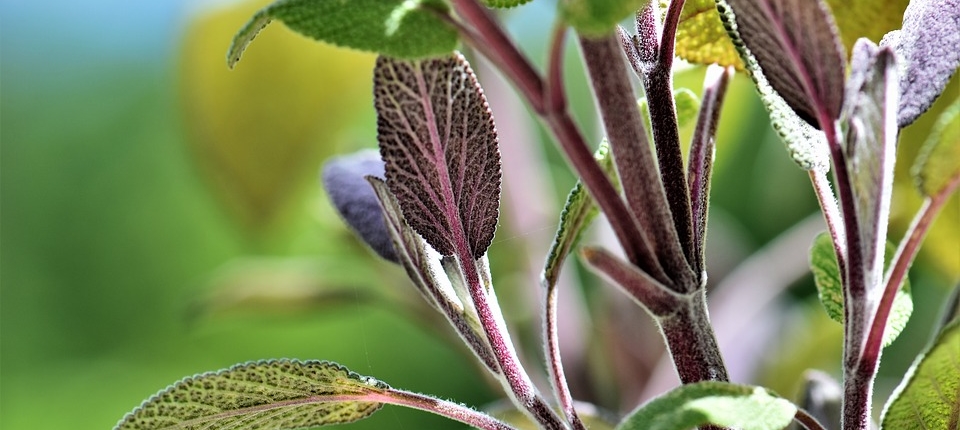
Sage, as we know, is a type of herb. The sage plant has been used by a number of cultures for thousands of years. It has been used in Chinese medicine. It has been used by Native Americans in various ceremonies and for medicinal purposes. Some have even suggested that it leads to immortality!
In China, sage tea has been called the “thinker’s tea.” Along with its anti-inflammatory properties, it has been known to help improve memory and overall brain function. Perhaps that is why the word “sage” also is used to describe a person who is wise. It can also be used as an adjective (as in “sage advice”).
The title of this article is a deliberate play on words. Sages and ages. They both connote a harkening back to ancient times as well as serve as a current example of ancient traditions put to good use in the so-called modern age. Has there been a resurgence, or have these practices been put to good use all along? Are we perhaps simply more aware of them now, due to the internet, globalization, and social media?
Sage has even become a somewhat trendy baby name, at least in the United States. I wonder if it’s part of the ‘Apple’ craze? (Referring to the celebrity’s baby’s name, not the computer company.)
 We all remember being asked the question when we were young: What do you want to be when you grow up? Me: a philosopher. I didn’t hear anyone around me saying that they wanted to be that. It wasn’t exactly listed anywhere as a possible career track. That didn’t matter to me. If it was needed, and served a purpose, why couldn’t it be an occupation?
I wasn’t even exactly sure what all a job as a philosopher would entail. I knew in my heart, though, that it was a role that would be important and one that would be of service to others. In my imagination, philosophers were the wisest people in their communities. And, as such, they had a responsibility to answer seekers’ questions and provide helpful suggestions, recommendations, and solutions.
Sometimes we picture “wise ones” sitting on a mountain top, or living in caves in the Himalayas. In my mind’s eye, I pictured them more along the lines of a wise man or wise woman in Ancient Greece sitting quietly in a town square, as the local villagers would stop by whenever they were seeking an answer to an inquiry or when wrestling with a concern that was weighing heavily on their soul, or when struggling with a conflict they couldn’t quite resolve.
I pictured philosophers dispensing wisdom not unlike a modern day pharmacist dispensing medicine. And, I did truly envision “philosopher” as an actual vocation, and a paid position, for sure. I even had a specific annual salary in mind. I thought that a philosopher should make $300,000 a year. Here was my reasoning: At the time, the President of the United States’ annual salary was set at $200,000. Knowing that, accordingly, I figured that philosophers should be paid at least 50% more than the President, as they would be at least that much more wise and valuable to the country and citizenry! Apparently, I really had put a lot of thought into this (grin).
While Philosopher or Sage may not be a job title, certainly there are modern day professions where others seek their guidance and advice. Lawyers fall into that category (hence, the term “counselor at law”). As with some other professions, within law, there are rules of professional responsibility. It is part of the licensing process, and continuing legal education requirements as well. And, as covered in this week’s Six-Minute Saturdays episode, many lawyers including myself were drawn to the law as a career because of a deep desire to be of service.
Admittedly, not all legal advice is the sagest or the wisest. I would suggest, though, that the profession is at least designed to serve that purpose, and with that intention. And, ultimately, the client retains control over whether to heed that advice, ignore it, or even to seek additional opinions.
For your consideration:
So, with that in mind then, allow me to pose this question: Upon whom, ultimately, do we need to rely, for the sagest advice of all?
Are we not, each of us, deep down, our own best philosopher? We simply need to access that inner wise sage. That’s why meditation is important. That’s why getting quiet and still is wise. By listening to our own inner guidance and messages, we each hold the power and divinity to reach the most appropriate conclusions and answers for ourselves. And, that is valuable beyond compare.
Okay, your turn:
What’s been the sagest advice that you’ve ever received? What’s the sagest advice that you’ve ever given? What’s the best advice that your inner-sage has revealed to you? What made it so? Did you act on it?
I invite you to SHARE your thoughts, feelings, and experiences by leaving a Reply in the Comments section, below. Soul-to-soul!

 You can weave a number of short activities into your work day, throughout the week, or on the weekends. Here is a list to keep handy, of some examples to try, that are easy to do up to six minutes at a time:
 The benefits to be gleaned from these brief and empowering uses of time are many, and include:


 During this week of the new moon and the equinox, it’s a powerful time to feel into where you may be out of balance in your life, and to consider ways to bring yourself into a state of equilibrium.
 It got me to contemplating about how much a strong core serves us overall in life as well. There will always be external, and sometimes internal, factors that threaten to throw us off balance. The stronger we develop and maintain our central strength, the greater the opportunity to live our lives from a place of equilibrium. It’s not passive. It’s active.
 enerate our spiritually strong fire and heat – from a place of solidity, groundedness, centeredness – from a place of equilibrium! It’s stable, not wobbly. We each hold this potential within us. It’s simply up to each of us to take notice, take heed, and take action. It is what is especially needed now, during these turbulent times.
 It’s a particularly energetically charged time in the United States, as evidenced by recent politically volatile and even at times highly venomous and violence-infused protests, and counterprotests, resulting in understandable public outcries and feelings of despair and disbelief.
 What if duality were no longer how we positioned things? What if we were to approach these political divides from a place of universality, instead? As humans, after all: We share the same air, bleed the same blood, shed the same tears.
 Varying to some degree only by age and gender, our human bodies are approximately 70 percent water. Water is the primary building block of human cells. And, water covers nearly 71 percent of the Earth’s surface. It’s vitally important to our existence, as individuals and as a species. And yet, or perhaps precisely because of its prevalence in our world, we tend to take it for granted. You’d think it would be difficult for us to ignore, but somehow we do?
 In its natural form, water when frozen forms into hexagonal (six-sided) shaped ice crystals. The details within the outlying formation do vary (you may have heard the expression “no two snowflakes are exactly alike”) – but what remains constant in nature is the self-organizing pattern of six-sided frozen water crystals. There’s lots to explore with regard to sacred geometry (beyond the scope of this blog post), many aspects of which have been observed and studied over the past many centuries. It’s not merely a coincidence that many parts of nature, left to their own (divine?) devices, fall into recurring patterns. It’s the intervention of humankind that threatens to, and often does, however, disturb these naturally occurring patterns – as the Emoto experiments demonstrate.
 Upon the return, I took my turn at the helm. Clearly, we knew our intention, and our destination – to get the boat and ourselves back to the mainland and the port from which we had originally departed. It was at that dock where we had left our cars, too – so we knew that’s where we needed to point the boat.