October brings a noticeable shift in the atmosphere. The days grow shorter, the light changes, and the natural world adjusts to a new season. It’s a fitting time to consider what we see, what we assume, and what we know to be true beneath the surface of our everyday experiences.

Traditionally, October has been associated with the thinning of the veils, a time when what is normally hidden becomes easier to perceive. Whether or not that symbolism resonates with you, there’s a practical interpretation worth exploring: Sometimes we need to look beyond appearances, expectations, and other people’s opinions to recognize what we already know.

And that brings us to something especially valuable at this stage of life and career: personal authority.

You’ve Earned the Right to Trust Yourself

Think about the experience you’ve accumulated over the years. You’ve navigated professional challenges, made difficult decisions, learned from mistakes, and discovered what works for you. You’ve likely developed a fairly sophisticated understanding of people, circumstances, and your own capabilities.

Yet even accomplished professionals sometimes find themselves second-guessing their instincts. We seek additional opinions, reconsider decisions we’ve already made, or feel compelled to explain choices that don’t require anyone else’s approval.

Consulting trusted colleagues and considering different perspectives are signs of sound judgment. But there’s a difference between gathering useful information and continually outsourcing confidence in our own decisions. Personal authority means recognizing that your experience, values, and judgment deserve a meaningful place at the decision-making table. In fact, when it comes to your own life, they deserve the leading role.

Look Beyond What’s Being Presented

One of the advantages of professional maturity is the ability to recognize that what’s visible isn’t always the whole story.

A seemingly attractive opportunity may carry expectations that conflict with your priorities. A colleague’s strong opinion may reflect their own concerns rather than an objective assessment of your situation. A long-standing professional obligation may continue simply because nobody has questioned whether it still makes sense. Seeing beneath the surface means being willing to examine these situations without automatically accepting the prevailing narrative.

It also means paying attention to your own responses. When something feels out of alignment, consider why. Perhaps you’ve noticed a pattern, recognized an inconsistency, or identified a concern that hasn’t yet been fully articulated.

Your instincts aren’t infallible, of course. They’re information, not unquestionable instructions. They do, however, deserve consideration alongside what’s directly observable. The goal isn’t to become suspicious or overly analytical. It’s to become more discerning about what you accept, what you question, and what you choose to do next.

Personal Authority Doesn’t Require a Big Outward Performance

There’s a misconception that standing in your personal authority requires making bold declarations, confronting everyone who disagrees with you, or demonstrating unwavering certainty. Sometimes personal authority looks like calmly declining an opportunity that isn’t right for you. Sometimes it’s choosing not to engage in a conversation that’s going nowhere. Other times, it’s listening respectfully to someone’s advice and deciding to take a different path.

You can be open-minded without being easily influenced. You can be collaborative without abandoning your standards. And you can acknowledge uncertainty without surrendering your ability to make a thoughtful decision.

For high-achieving women, especially those accustomed to being reliable, accommodating, and responsive to others, this can be an important distinction. You don’t need to defend every boundary or provide an elaborate explanation for every personal choice.

Your authority doesn’t depend on how convincingly you explain yourself. It grows through how consistently you honor what you know.

For Your Consideration:

As we move further into the final quarter of 2026, consider where you might benefit from exercising a little more personal authority.

  • Notice where you’re seeking unnecessary approval. Is there a decision you’ve already considered carefully but haven’t acted upon because you’re waiting for someone else’s endorsement?
  • Question an assumption. Is something in your professional or personal life continuing simply because it’s always been done that way?
  • Give your judgment some credit. Recall a time when you trusted yourself and made a decision that served you well. What did that experience teach you?
  • Choose one clear action. Identify a situation where you can honor your priorities without overexplaining, apologizing, or inviting unnecessary debate.

These don’t need to be dramatic changes. Often, the most meaningful shifts begin with a quiet decision to trust ourselves a little more.

As October unfolds, I invite you to pay attention to what becomes clearer when you look beneath the surface. Perhaps you’ll recognize that an old expectation no longer fits. Maybe you’ll discover that someone else’s urgency doesn’t need to become your responsibility. Or you might simply realize that you’ve accumulated more wisdom and good judgment than you’ve been giving yourself credit for.

Whatever emerges, remember that personal authority isn’t about always being right. It’s about accepting responsibility for your choices while trusting yourself to navigate the outcomes.

You’ve spent years developing your professional expertise and learning what matters to you. Let that experience count. You don’t need everyone’s agreement to trust what you know about yourself. And that’s a powerful place from which to begin a new season.

Okay, your turn:

What’s one thing you can do today to listen to your instincts and trust your judgment? What does that look like for you?

I’ll be taking a road trip this September, and one of the things I appreciate about getting away is the opportunity to see life from somewhere else for a while. That means taking different roads, seeing new landscapes, and meeting new people. Even something as simple as having morning coffee somewhere unfamiliar can create a subtle shift in perspective.

Of course, you don’t need to pack a bag or leave town to experience a change of scenery. Sometimes, however, what we need is to step outside the familiar long enough to enjoy a new view.

A Different View Can Reveal Something New

As capable, accomplished professionals, we tend to be pretty good at solving problems. When something isn’t working, we think about ways to improve it. We analyze it. We make lists, consider options, and gather information and try to figure out the best way forward. Those skills serve us well. We may reach a point, though, where thinking harder about something from the same vantage point simply produces more of the same thinking. That’s when a change of scenery can help.

It might mean working from a different location for an afternoon. Or, it could mean taking a day trip somewhere you haven’t been in years. Have you thought about having lunch with someone outside your usual professional circle? Or, could you spend a few hours in a museum, a botanical garden, a bookstore or a café without an agenda?

Maybe you look at a career challenge from the perspective of the person you were ten years ago. Would she be surprised by or even proud of how far you’ve come?

Maybe you imagine yourself five years from now looking back at the decision in front of you today. What might seem more important from that vantage point? Or perhaps you question an assumption that has become so familiar you no longer realize you’re making it. Simply put: sometimes clarity begins with a different view.

You Don’t Have to Solve Anything

Here’s the part I especially want us to remember this month: a change of scenery does not need to become another productivity exercise.You don’t have to take yourself to a beautiful location and immediately ask, “Okay, what am I supposed to figure out or solve here?” You are allowed to simply experience something different.

There is value in interrupting our usual patterns. When the familiar cues of everyday life change, even temporarily, our attention changes with them. We notice things. We become curious. We remember ideas we had forgotten. We may find ourselves thinking about an old problem in a new way.

Or perhaps nothing dramatic happens at all. That’s fine, too. The purpose isn’t to force an insight. It’s to create enough room for a new perspective to become possible.

Small Changes Count

September arrives at an interesting point in the year. By the end of September, we’ve moved through the expansiveness of summer, and the final months of 2026 are beginning to come into view.

There can be a temptation at this point to immediately start assessing: What still needs to happen? What goals haven’t been completed? What should I accomplish before the end of the year? Those questions have their place. But before rushing into the final stretch, perhaps we can look around first. What does your life look like from where you are standing today? What does your career look like? What are you seeing differently now than you did at the beginning of the year?

You may discover that something you thought was enormously important in January matters much less now. Something else may have quietly moved from the background to the foreground. A possibility you couldn’t see earlier may now seem obvious.

Perspective changes as we do.

For Your Consideration

As we move into this September New Moon, consider where a small change of scenery might serve you.

Where in your life or career have you been looking at something from the same angle for too long? What could you change about your surroundings, routine or approach that might help you see it differently? Is there someone whose perspective could expand your own?

And perhaps most importantly, where could you give yourself permission to explore without requiring an immediate outcome?

You don’t necessarily need a major change. You may simply need a different view.

Sometime this month, intentionally change your scenery.

Go somewhere different. Work somewhere different. Take a different route. Have a conversation with someone new. Spend an afternoon somewhere that makes you curious. Step outside your regular routine in whatever way feels accessible to you.

And then resist the urge to make the experience productive.

Look around.

Pay attention.

Notice what feels different from this vantage point.

You don’t need to come home with a five-point plan or a major revelation. Maybe you’ll simply return with a little more energy, a new idea, or a question you hadn’t thought to ask before.

That may be more than enough.

Sometimes clarity begins with a different view.

Okay, your turn:

When have you made a deliberate attempt to change your scenery? What did you experience or notice as a result?

I invite you to share your observations, feelings, and experiences by leaving a Reply in the Comments section, below. Soul-to-soul!

There is a point in every season of growth when the work begins to show.

We spend so much of the year focused on what needs our attention next. We set goals, make decisions, adjust our plans, solve problems, and keep moving. Especially in our careers, it can become second nature to look ahead before we have fully acknowledged what has already taken root.

August offers a good opportunity to do something different: notice the harvest.

What have you been cultivating this year that is beginning to produce results? Where are you experiencing greater ease, clarity, opportunity, confidence, connection, or momentum? What is working now that perhaps was not working six months or a year ago?

Sometimes abundance arrives as the opportunity you hoped for. Sometimes it is financial or professional growth: a new client, greater recognition, a successful project, or an unexpected invitation. Sometimes, the bounty even arrives in a way that brings with it a bit of surprise and delight.

It might be having better boundaries than you did last year. It might be trusting yourself more quickly when a decision needs to be made. Perhaps you have become more selective about where you spend your time and energy. Maybe you have finally stopped trying to make something work that simply wasn’t right for you. These are forms of abundance, too.

Let Yourself Receive

For capable, accomplished people, receiving can be difficult. We are accustomed to producing. We know how to work, contribute, organize, plan, lead, support, and make things happen. When something goes well, we may enjoy it briefly before turning our attention toward the next responsibility.

There is, however, so much value in actually receiving what you have worked to create. Receiving means allowing yourself to recognize that your effort mattered. It means acknowledging that your decisions mattered. Those difficult conversations mattered. The course corrections you made…those mattered, too. The days when you kept going mattered; and so did the days when you wisely decided to stop, reconsider, and move in another direction.

You do not have to minimize what is going well simply because there is still more you want to accomplish.

You can appreciate the harvest while continuing to cultivate the field.

Remember Those Who Helped Till the Soil

Very little that we accomplish happens entirely on our own. Someone may have encouraged you when an idea was still fragile. Someone made an introduction, shared useful advice, recommended you for an opportunity, listened while you worked through a difficult decision, or simply reminded you of your capabilities at exactly the right moment.

There are also people whose contributions may have been less visible. Maybe it was a colleague who quietly made your work easier. How about that one friend who gave you room to breathe? Can you be appreciative of a mentor who offered perspective years ago that you still use today? What about those who supported you through a demanding season?

Part of appreciating abundance is remembering the people who helped till the soil. This doesn’t diminish your own effort. Quite the opposite. It gives you a more complete picture of how growth actually happens.

Take a moment this month to think about the people who have contributed to what is thriving in your life and career today. And when it feels appropriate, tell them.

Make Room for More

A harvest isn’t simply the end result of what was planted. It also provides ample fruit for what comes next. Abundance does not require us to constantly chase more. Sometimes it asks us to recognize what is already working and give it the conditions to continue.

That may mean protecting a successful habit. It may mean strengthening an important professional relationship. It may mean continuing to make space for work that feels meaningful. May you continue to say ‘yes’ to those opportunities that build naturally on what you have already created.

For Your Consideration

As you move through August, consider where you can see evidence of your own harvest. What has grown because you consistently gave it attention? What opportunity, relationship, habit, or decision is producing benefits now? What are you receiving that you might have overlooked because you were already focused on what comes next?

Then consider the people who helped prepare the ground. Who encouraged you, supported you, opened a door, offered advice, challenged your thinking, or made your path a little easier?

Finally, ask yourself: What is thriving in my life right now, and what would help it continue to thrive? You don’t need to reinvent everything for the remainder of the year. You may simply need to recognize what is already bearing fruit and continue tending it well.

Before this month gets away from you, take a few minutes to name your harvest.

Write down three things you are grateful to be receiving in your life or career right now. Then name three people who, in some way, helped you till the soil along the way.Reach out to at least one of them and say thank you. And then give yourself a little credit, too.

You have been cultivating this life all year. Some of what you planted is beginning to bloom, some is still growing beneath the surface, and some may have taught you what you no longer want to grow.

For now, appreciate what is already here. Receive it. Enjoy it. And keep tending what you desire to grow.

Okay, your turn:

Where in your life and career are you seeing the fruits of your labor?

I invite you to share your observations, feelings, and experiences by leaving a Reply in the Comments section, below. Soul-to-soul!

After spending so much of modern life online, this season gently reminds us how grounding it can be to reconnect with the physical world around us.

As Spring unfolds, it feels gradual at first. Then suddenly, everything outside seems more vibrant. Evening walks become appealing again. Sunlight stretches later into the day. Even brief moments outdoors can create the kind of mental reset many professionals do not realize they have been needing.

One of the simplest forms of recalibration available to us is also one of the most overlooked: stepping outside consistently enough to actually experience where we are.

It does not mean taking calls while distractedly pacing. It does not mean multitasking through your entire lunch break.

There is a reason your body softens after a walk near trees. There is a reason perspective returns after sitting near water or watching the sky change colors at sunset. Nature operates at a sustainable rhythm. It does not force growth. It does not panic when things take time. It does not apologize for seasons of rest or renewal.

For many mid-career professionals, life can become so structured around productivity that simple enjoyment starts to feel strangely unfamiliar. You may believe you need to earn downtime. You may even feel guilty when you are not actively producing something measurable.

This month, consider allowing the outdoors to become less of an occasional escape and more of a regular companion. It does not require an elaborate trip to Nepal, nor a complete calendar overhaul.

It can begin very simply. Open the windows earlier in the morning. Take your coffee outside before checking your phone. Eat lunch out in the sunlight instead of at your desk.

Visit a local farmer’s market. Sit beneath a tree without needing to “accomplish” anything while you are there. Go for an evening walk without turning it into a fitness competition.

Notice the small things again. Notice the way the breeze changes by evening. Notice the scent of jasmine in the air. Listen for the sound of birds chirping in the morning. Or simply observe the color of the sky at dusk. These moments matter more than we often realize.

When your attention constantly stays locked onto pressure, deadlines, and performance, your internal world narrows. Nature gently widens it again. Notice the beauty all around you.

The professionals who thrive long-term are not always the ones pushing the hardest every moment of the day. Often, they are the ones who understand rhythm. They know when to focus intensely and when to step back long enough to replenish themselves.

There is something deeply grounding about reconnecting with physical reality. So much of modern professional life happens digitally now. With the ever-present emails, notifications, web meetings…it often creates an artificial sense of urgency.

Meanwhile, the natural world continues operating without demanding your immediate reply.

A flower blooms without sending a notification. A sunset arrives without asking for your productivity metrics. A breeze through the trees does not require any specific action from you at all. There is peace in that simplicity.

You do not need to hide from your responsibilities. Sometimes you simply need moments that reflect back to you that you are more than your workload.

This month, let being outdoors become less about performance and more about presence.

You do not need to hike fourteen miles. You do not need expensive gear. You do not need to become a wholly different person. You simply need to remember that your life is happening now, not someday after things finally calm down.

For Your Consideration:

Here are a few gentle questions to reflect on:

  • When was the last time you spent time outdoors without multitasking?
  • What outdoor environments make you feel most like yourself?
  • Are you allowing enough space in your life for restoration, beauty, and simple enjoyment?
  • What would shift if “getting outside” became part of your well-being strategy instead of an afterthought?

Sometimes clarity does not arrive through overthinking. Sometimes it arrives during a quiet walk around the park.

Okay, your turn:

What is one small outdoor ritual you can realistically maintain? Maybe it is sitting outdoors for a few quiet moments before the workday begins. Maybe it is visiting a botanical garden, planning a beach afternoon, or gazing out at the stars outside in the evenings. 

I invite you to share your observations, feelings, and experiences by leaving a Reply in the Comments section, below. Soul-to-soul!

The Dara Knot: Rooted Strength for a Sustainable Year

For this new moon, ask yourself this question: Are you building this year from your roots, or from your adrenaline? For this moon cycle, let’s allow the Celtic symbol of the Dara Knot to guide us.

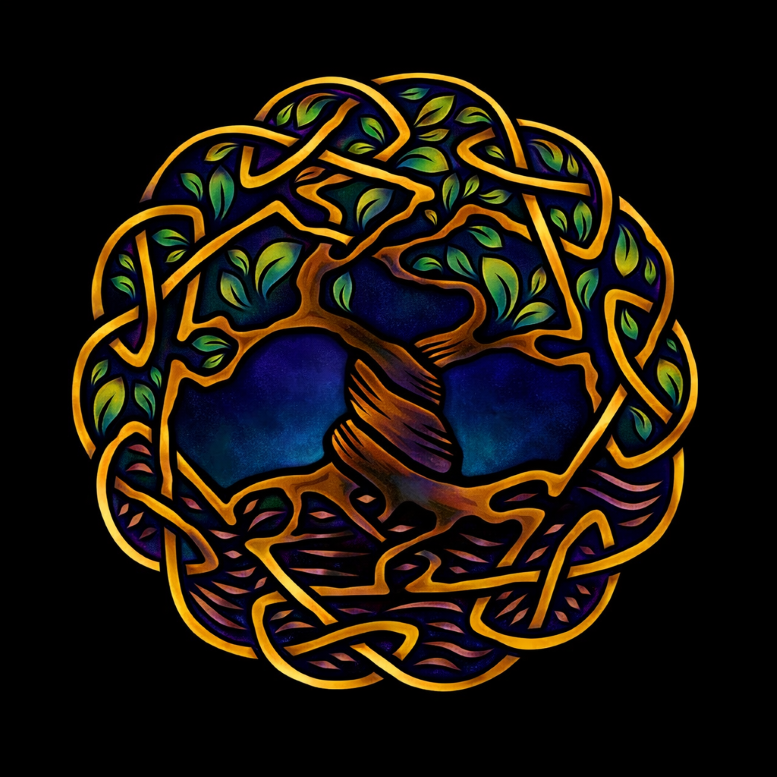
Derived from the Irish word doire, meaning oak grove, the Dara Knot symbolizes strength, endurance, and quiet authority. The oak’s roots grow deep before its branches reach wide. It survives storms not by flailing, but by anchoring. Its interwoven lines have no clear beginning and no obvious end. The knot is continuous, and the symbol of the oak tree indicates it is grounded and stable. And, think of the power and strength held by an entire grove of oak trees!

This is the energy we desire for 2026. Rather than frantic ambition, let’s stay steady and sustained. Let’s not accept depletion disguised as productivity.

The capable, intelligent, mid-career professional women who read this do not need more force. They need steadiness. The Dara Knot reminds us that true confidence does not shout. It stands. It trusts its foundation.

If January was about vision, February is about structure. If January was about possibility, February is about sustainability. You do not need to sprint through 2026. You need to root into it.

And here is the reassurance you may be quietly craving: you already have what you need. Your experience is not accidental. Your wisdom is earned. Your resilience is proven. You are not starting from scratch this year. You are building from depth.

There is a difference between intense motivation and steady confidence. Motivation fluctuates. Steadiness sustains. The oak does not wake each morning wondering if it feels inspired enough to hold its ground. It simply stands.

Instead of asking, “Can I keep up this pace?” try asking, “Is this pace rooted?” Instead of “How much can I accomplish?” ask, “What can I sustain?”

Strength is not all about how much you can carry. Sustainable strength can be all about how well you are anchored while carrying it.

Anchoring looks practical. It looks like setting realistic boundaries, conserving energy for what matters, saying no without over-explaining, structuring your week so you do not resent it, and building rhythms instead of impulsively reacting to chaos.

Sustainable success is not built in frenzied bursts. It is built upon healthy patterns.

A few friendly reminders:

You have tools now that you did not always have: self-awareness, emotional intelligence, professional competence, discernment, and the ability to evaluate before committing. That moment of reflection allows your wisdom to rise to the surface from deep roots. It is the moment where balanced professionals choose purposefully instead of acting reflexively.

This February new moon is not asking you to add more. It is asking you to strengthen what is already working. Where are your roots strong? Where have you already built stability? What systems are quietly supporting you? Build there. Reinforce there. Trust there.

The oak does not compare itself to the pine. It does not rush its growth. It does not apologize for taking up space. It grows slowly, and that is precisely why it endures.

You do not have to prove that you can do hard things in 2026. You already have. Now the work is refinement., and conservation. It can mean expansion, too. But allow it to be wise expansion. Be aware of those instances when you may fall prey to allowing expansion at any cost.

Let February be the month you shift from urgency to steadiness. Let it be the month you stop gripping and start grounding. Let it be the month you decide: I will build this year in a way that I can live from a place of quiet, humble strength.

This way, strength is not dramatic. It is consistent., steady, and sure-footed.

For high-achieving women in demanding careers, dramatic strength often looks impressive on the outside. It is the late nights, the crisis management, the heroic over-delivering, the reputation for always being the one who can handle it. Keep in mind, though, that dramatic strength is exhausting. It relies on seemingly never-ending spikes of adrenaline and the constant pushing at maximum capacity.

Consistent, steady strength looks different. It is meeting your deadlines without sacrificing your health. It is preparing thoroughly so you do not have to panic. It is choosing projects that align with your values instead of accepting everything to stay visible. It is building a reputation for steadiness, clarity, and sound judgment.

Consistent strength fosters sustainable authority. It allows you to remain powerful without running yourself ragged. It creates a career you can inhabit for decades, not merely survive in short seasons.

As you move through this month, remember: you are not behind. You are not lacking. You are not fragile. You are rooted. And from that place, you can be resplendent, radiant, and true.

For Your Consideration:

Where in your life do you already feel rooted? What commitments feel sturdy, and which feel brittle? If you reduced your pace by ten percent, what would lovingly fall away, and what would quietly improve? What boundary would make you stronger, not weaker?

Where are you underestimating the depth of your own experience?

The Dara Knot does not unravel.  It holds onto its life force. So can you.

Okay, Your Turn:

Close your eyes and picture yourself at the end of 2026. What rhythm allowed that version of you to thrive? What did you stop tolerating? What did you protect? What did you build slowly?

I invite you to share your observations, feelings, and experiences by leaving a Reply in the Comments section, below. Soul-to-soul!

© 2026 Lori A. Noonan. All Rights Reserved.

Let there be peace…by your own design

December has a way of turning the volume up. Calendars fill quickly. Family dynamics intensify. End of year deadlines arrive clothed in sparkle and yet also with a sense of urgency. For many mid-career professional women, especially those in high pressure roles, this month can feel like a full contact sport.

For this December New Moon, let us do something different. Let us choose peace as a practice rather than a prize. Allow room for peace that does not depend on perfect conditions. May there be room for peace to exist even amongst the chaos. Do not wait for chaos to settle as that may not ever happen, at least not completely.

Across cultures and traditions, this time of year carries a shared invitation. Give yourself permission to sit quietly. Observe. Select your next move with intention and after deliberate reflection. That means slowing down. Taking a breath. It gives room for you to choose to return to what matters. Create light on purpose.

In Christianity, the season of Advent emphasizes waiting and joyful expectation. Peace is cultivated gradually through patience and faithfulness, not rushed into existence. It is a steady devotion rather than a dramatic transformation.

In Judaism, Hanukkah offers the enduring image of a persistent light evening after evening. The light survives despite the struggle and the conflict. It can represent a commitment to tend to what is sacred, even when darkness exists.

Kwanzaa centers on principles such as unity, purpose, and collective responsibility. Peace here is grounded in values and community. It is built through alignment and intentional action rather than performance or perfection.

In Buddhist traditions, peace begins with awareness. By observing what is without grasping or resisting, a sense of calm emerges. Peace is allowed rather than forced.

Earth based and solstice traditions remind us that rest is wisdom. Nature grows quiet without apology. The darkest time of the year becomes an invitation to replenish rather than push forward.

Astrologically, the New Moon represents a reset. It offers a fresh page and a chance to set intentions without dragging old noise into a new cycle.

Different traditions use different language, but the through line prevails: Settle into what’s needing to be dormant. Pause. Tend the light. Begin again with intention.

For your consideration:

Before stepping into the next year, take time to take a heartfelt assessment of this year. Assess where you’ve been, and where your intentions led you in your life and career.  Reflect more deeply, into the whole of your experiences. Sink into the deeper moments, and not simply speed through the highlight reel.

What did you keep showing up for even when it was difficult? Where did you become more discerning about who and what receives your energy? What did you complete, close, or release? What are you proud of that no one applauded? What part of you is asking for peace as a necessity rather than a luxury?

If you feel behind or pressured to do more, let this be a reminder: You are not behind. You are in process. The end of the year is not a grading period. It is a threshold.

For high achieving women, peace often gets postponed until everything is finished. In demanding careers, everything is rarely finished. That belief can keep you running indefinitely.

It may help to redefine peace in a way that respects your real life.

Peace is not an empty calendar. It is a calendar that reflects your values.

Peace is not a perfect workplace. It is the ability to stay anchored when the workplace is imperfect.

Peace is not constant calm. It is having reliable ways to return to center. Peace can be a boundary that you set and that you feel.

Okay, your turn:

What would bring you even a little bit more peace this week? Can you come up with more than one way? How about three to five ways?

I invite you to share your observations, feelings, and experiences by leaving a Reply in the Comments section, below. Soul-to-soul!

Navigating Transitions with Clarity and Ease

October subtly shimmers with that unmistakable indication of change. The air holds a certain suspense. Shadows lengthen. Light filters through trees at a gentler angle, and something in us instinctively knows: we are crossing a threshold.

Across time and cultures, this is known as the thinning of the veils — when the visible and invisible worlds feel a little closer. Mystics and poets have long written about this moment when intuition heightens, memories resurface, and clarity comes through quiet reflection rather than constant striving.

For many mid-career professional women, the metaphorical veil can appear in its own modern way — not between the living and the departed, but between who we’ve been in our careers and who we are becoming next. The season invites us to pause between identities: the achiever and the nurturer, the strategist, and the dreamer, the one who once climbed the ladder and the one now choosing which ladders are even worth climbing.

The Professional Veil

Think of all the layers we accumulate over years in high-performance careers — the titles, certifications, deadlines, and expectations. These layers once served a purpose; they kept us feeling accomplished, visible, validated. But over time, they can also obscure our truest self — the part that simply wants to do good work with integrity, creativity, and heart.

The “thinning of the veil” invites us to see through those layers. It’s a time to look with compassion at what we’ve built, and to ask: What do I wish to carry forward, and what can I lovingly lay down?

Perhaps it’s the relentless pace. Perhaps it’s a version of success that no longer resonates. Perhaps it’s the unspoken rule that rest equals weakness.

When we allow these veils to thin, clarity begins to form — not in the noise of a to-do list, but in the quiet awareness that rises between breaths.

A 5-Minute Reflection: Seeing Through

Take a few deep breaths. Picture a soft, silvery veil before you. On one side stands your current professional world — structured, reliable, maybe even predictable. On the other side glimmers what could be — freer, lighter, more aligned.

With each breath, imagine the veil becoming more transparent. You begin to see both realities at once. There’s no rush to choose. You’re simply present to the possibilities — noticing what draws your heart forward, what feels congruent, what brings peace.

That gentle knowing? That’s your intuition. That’s clarity beyond logic — the kind that doesn’t shout, but whispers truth.

“Thinning the veil” at work doesn’t require a crystal ball — just intention and honesty. Here’s how it may look in real life:

Simplify your commitments. If a board seat, side project, or committee drains more energy than it gives, it may be time to thank it for its service and move on.

Speak truth gently but directly. Allow transparency to become your superpower. Honest conversations build bridges, not barriers.

Reclaim intuition as a leadership tool. Data is valuable, but so is discernment. The moment you sense misalignment — that quiet internal tug — treat it as valid information.

Let endings be sacred. Not every departure requires drama. Sometimes we simply outgrow old versions of success. Let that be okay.

Harvesting What Still Feeds You

Take time to harvest what’s still nourishing. What projects brought meaning? What collaborations felt easeful? What moments reminded you that you’re exactly where you’re meant to be — even amid uncertainty?

By acknowledging what’s working, you create satisfaction. By honoring what’s ending, you create space. And by standing in that delicate, luminous in-between, you begin to see the path ahead with clearer vision.

For Your Consideration:

This month, let October’s mystery guide you back to yourself. The veil thins where awareness deepens. You don’t have to force transformation; you only need to stay awake to it. Trust that the next version of your professional journey is already forming — quietly, beautifully, and in perfect timing.

Okay, your turn:

Where are you currently standing between worlds — between what was and what’s next? What parts of your professional identity are asking to be honored before you move forward? How might you bring more presence, not pressure, to this passage of time?

I invite you to share your observations, feelings, and experiences by leaving a Reply in the Comments section, below. Soul-to-soul!

The Power of Healthy Permission

After the surge of spring’s bloom and the bustle of early-year momentum, here we are approaching the midway point of the year. View this not as a halt, but a moment to regroup, re-center, and reconnect.

This new moon, what if you granted yourself permission?

Not the reluctant kind that comes with guilt or second-guessing. But full-hearted, grace-filled permission to slow down, take stock, and tend to your inner rhythm.

Think back to the intentions you set earlier this year. Maybe you are nurturing a creative dream, revamping your relationship with sleep, or learning how to better advocate for yourself. Maybe you are still unsure of what is shifting, only that something is.

Wherever you are, May is a natural time to check in—not with judgment, but with curiosity. Let this be your green light to listen to what you need.

There is power in permission. It is not passive—it is intentional. It is a sacred “yes” to your inner intelligence.

So, give yourself permission to rest without apologizing. To say no without explaining. To shift course without proving. To simply be—without the need to fix, finish, or perform.

Recharging is not avoidance.
Regrouping is not weakness.
Reassessing is not failure.

These are acts of radical clarity—

and essential steps on any path

that is rooted in soul truth.

For your consideration:

You do not need to justify realignment. You only need to remember that you are allowed—always—to care for yourself with kindness and clarity.

Let this be your consent form. Not to do more, but to be more present with what feels best in this moment.

And if you are only able to tend to one area right now, let that be enough. If your progress is quiet or nonlinear, let that be enough. If your biggest act of courage this month is relaxing and listening to hear what you need, let that be enough.

This is your month of permission.

Honor it. Embrace it.
And above all, trust it.

Okay, your turn:

When is the last time you cut yourself some slack? Can you do so now, in this very moment? Ease into the day or evening?

I invite you to share your observations, feelings, and experiences by leaving a Reply in the Comments section, below. Soul-to-soul!

February unfolds as a fascinating mosaic of frosty fun and forward-thinking flair—a month that effortlessly blends the magic of winter with the promise of imminent renewal. With its mix of festive fervor, reflective moments, and a sprinkle of seasonal charm, February invites us to celebrate life in both its jubilant bursts and its quieter, introspective moments of repose.

A Month of Magic and Emergence

As the shortest month on the calendar, February may seem fleeting, but it packs an impressive punch of personality and poetic promise. The crisp, fragrant air carries a unique perfume—a blend of winter’s lingering chill and nature’s subtle prelude to spring. February offers a dual experience: a time to embrace both lively celebrations and the soft whisper of change.

Historical and Cultural Perspectives

February has long held a place in history as a month of both festivity and introspection. Ancient festivals and traditions celebrated this time of year as a period of purification and preparation, setting the stage for the eventual blossoming of spring. Today, these historical threads interweave with modern customs. The month is not only about love and romance but also about cherishing friendships and family bonds.

As you enjoy a frosty day or a festive gathering, consider how the traditions of yesteryear have influenced today’s celebrations, infusing each moment with a sense of purpose and connection.

Flavors, Festivals, and Fragrances

Beyond its historical significance, February is a sensory delight. Culinary enthusiasts revel in seasonal treats that are as flavorful as they are fun. Imagine enjoying a feast of comforting, aromatic dishes that perfectly mirror the month’s chilly charm—a veritable festival for your taste buds! Whether it is sipping on a fragrant spiced tea or savoring a hearty stew, each bite and every sip makes for a multisensory experience.

For Your Consideration:

Embracing the Chill and the Change

The gentle frost that decorates the landscapes of February is more than just a seasonal occurrence—it is a metaphor for life’s transient beauty. The chill in the air encourages us to draw closer to warmth, whether through the company of loved ones or the solace of personal reflection. In these cool moments, we find a powerful reminder that every ending, every freezing moment, is merely a prelude to transformation. The promise of spring lies just beyond the horizon, waiting to unfurl in a burst of colorful creativity and natural rebirth.

Reflection and Renewal

February’s dual nature—as both a time of celebration and contemplation—offers a unique opportunity for personal growth. The month gently nudges us to balance our inner lives with the external joys of the season. It invites us to pause, reflect, and prepare for the future with a spirit that is both free and focused. Whether you are reconnecting with old passions or discovering new interests, February serves as a fertile ground for introspection and renewal.

February is more than a mere marker on the calendar; it is a vibrant, multifaceted experience that celebrates life in all its forms. With its blend of festive energy, historical depth, and sensory delights, the month challenges us to find beauty in every moment—be it frosty or fragrant, fast-paced or reflective. As you navigate this marvelous month, let its fun and fanciful spirit inspire you to live with creative joy, embrace new beginnings, and cherish the subtle magic that lies within every fleeting moment.

Some recommendations:

  • Festive Celebrations: Embrace the lingering spirit of February by engaging in events into March that celebrate love, friendship, and creativity. Each festivity, from intimate dinners to grand parties, is an opportunity to revel in a blend of fun and finesse.
  • Fragrant Moments: Take time to notice the subtle, refreshing scents that characterize this time of year. Whether it is the crisp smell of freshly fallen snow or the hint of early spring hidden beneath winter’s surface, these fragrances are nature’s own celebration.
  • Forward-Thinking Flair: Let February inspire you to dream and plan. The month’s reflective quiet is a perfect backdrop for setting goals, embarking on new projects, or simply enjoying moments of mindful introspection.

Okay, your turn:

What would tickle your fancy this time of year? How about trying something new, or some things you’ve already done, but this time combining them into something new? I invite you to share your observations, feelings, and experiences by leaving a Reply in the Comments section, below. Soul-to-soul!

As October fades into November, there is a noticeable shift in the world around us. The days shorten and the nights stretch longer, casting a twilight hue over our daily routines. Shadows lengthen, and the sun’s journey across the sky seems fleeting. For many, this seasonal change is more than just a visual phenomenon—it is a time of transition that carries with it layers of symbolism, mystery, and a touch of the mystical.

The Long Shadows of Autumn

October is a month of vibrant colors and golden light, but it is also the beginning of a journey toward darkness. As the Earth tilts, the sun’s path across the sky lowers, casting longer shadows and giving everything a softer, almost ethereal glow. It is a time to slow down and take notice of the details that might go unseen in the full glare of summer sunlight.

There is a certain magic in those long shadows. They have a way of stretching out the day, as if trying to hold on to the light just a little bit longer. Inevitably, we edge closer to the darker, colder months, and this transition feels like the world is preparing to rest, to conserve its energy and hibernate.

The Thinning of the Veils

This moment between October and November has long been associated with the “thinning of the veils”—a poetic way of describing the idea that the boundary between the physical world and the spiritual realm becomes less distinct. Cultures around the world have their own ways of acknowledging this thinning. From Halloween and Samhain to Día de los Muertos, there is a shared sense that this is a time when the unseen lures closer, and the world is a little more open to mystery.

It is no coincidence that these traditions focus on honoring the dead and self-reflection on the past. As the natural world prepares for dormancy, we are also prompted to look inward. The longer nights encourage us to slow down, to be still, and to listen to things that might otherwise go unnoticed. It is a time to reconnect—with ourselves, with others, and perhaps with something greater than what we can see and touch.

Light Into Darkness: Embracing the Transition

The transition from October into November is a passage from light into darkness. While this might sound ominous, there’s beauty in it. Darkness has its own kind of clarity; it helps us focus, be more mindful, and appreciate the warmth and light when it does appear. This shift is a gentle reminder to conserve energy and reduce undue labor, not just for nature but for us, too.

Practical Tips for Embracing the Thinning of the Veils

  1. Create a reflection Ritual: Take some time each evening to reflect on the day. Light a candle, write in a journal, or simply sit quietly and observe the shift from light to darkness.
  2. Connect with the Natural World: Go for a walk during sunset and notice the changing light, the lengthening shadows, and the chill in the air. Allow yourself to feel a part of this larger transition.
  3. Celebrate the Darkness: Embrace the longer nights by creating cozy, warm spaces. Light a fire, wrap up in a blanket, and enjoy a hot drink. This is a time to rest and restore.
  4. Honor Your Ancestors: Consider adopting a small ritual to remember those who have passed. It could be as simple as lighting a candle in their memory or sharing stories about them with loved ones.

For Your Consideration:

The period from October into November is not only about losing light; it is about finding beauty in the dark. The thinning veils remind us that there is more to life than what is visible, and the lengthening shadows teach us to appreciate the subtle, silent moments. So, as we move deeper into autumn, let us allow ourselves to slow down, to see what the shadows reveal, and to find comfort in this gentle, quiet space between the worlds.

Okay, your turn:

What does this time as October slides into November mean to you? Do you observe any particular traditions? If so, which ones?

I invite you to share your observations, feelings, and experiences by leaving a Reply in the Comments section, below. Soul-to-soul!

© 2024 Lori A. Noonan. All Rights Reserved..